
Tracking and viewing
Logging a day takes seconds; reading it back is a calendar that shows what was logged, what is estimated, and how much to trust the estimate. All of it works with no network at all.
Log a day
Open a date and record what happened: period flow from an explicit "not bleeding today" note through light, medium, heavy, and super heavy; spotting; the symptoms you track, with intensity where it helps; a numeric reading like a basal-body temperature; personal tags; and a note for the day. Flow and symptoms are stored as their own records tied to their day, not flattened into one text field.
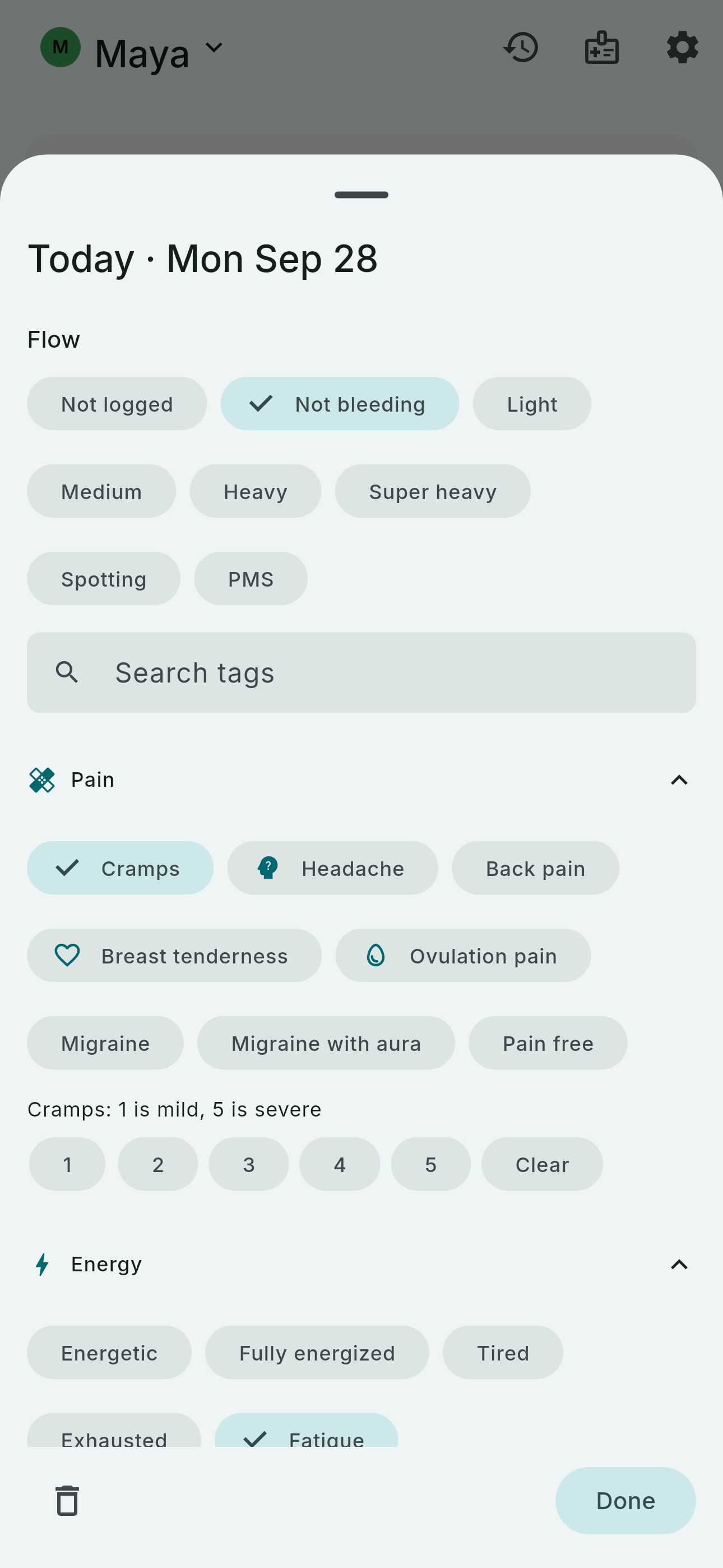
See the month
The month calendar shows logged bleeds and tags at a glance, with the estimated next period, cycle days, and the estimated premenstrual window drawn around them — always labelled as estimates, never styled as fact.
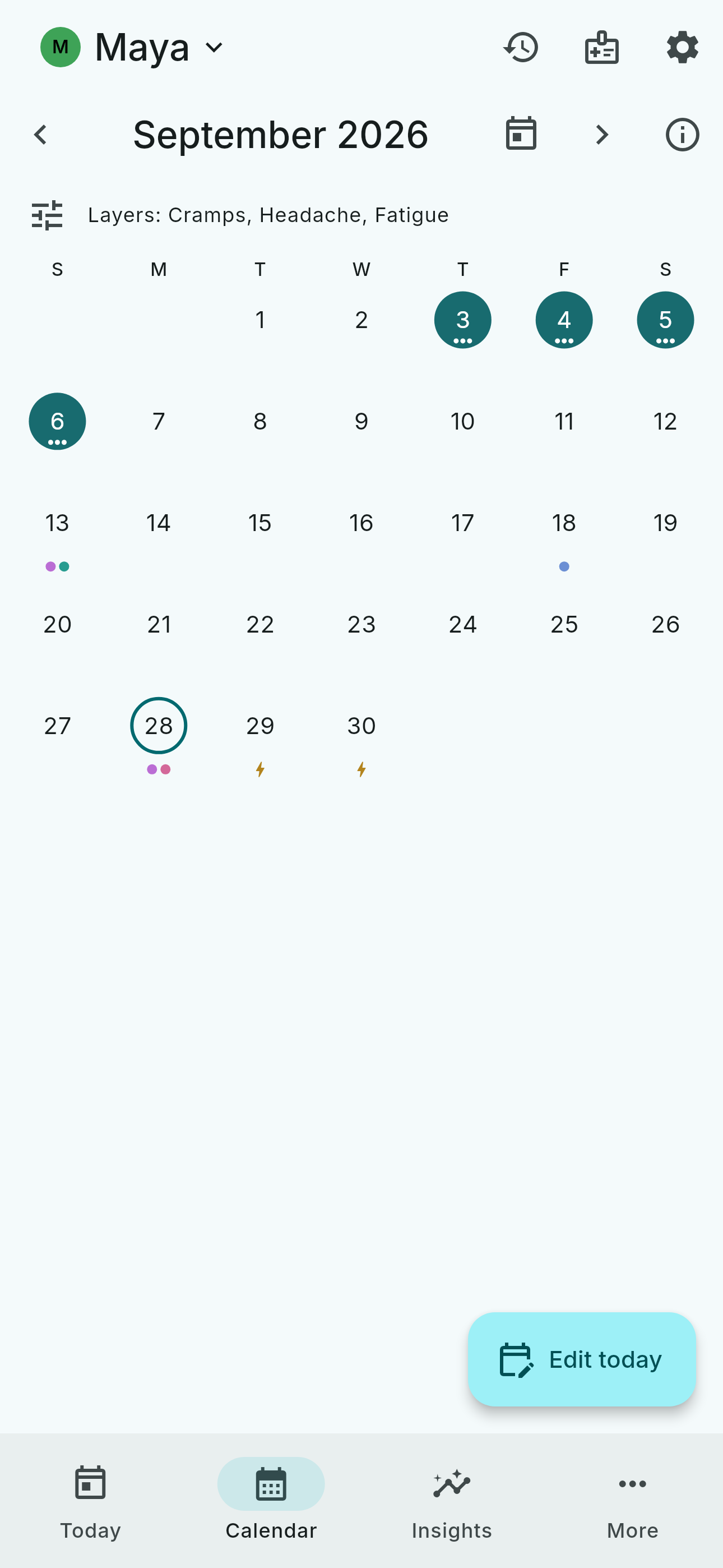
Estimates that show their work
Estimates are computed entirely on the device, from the cycle history the profile holds — no other signal goes into them. Every estimate carries a confidence tier (high, provisional, rough, or learning), and a profile with too little history says so plainly instead of guessing: "Keep logging — estimated bands appear once a few cycles are recorded."
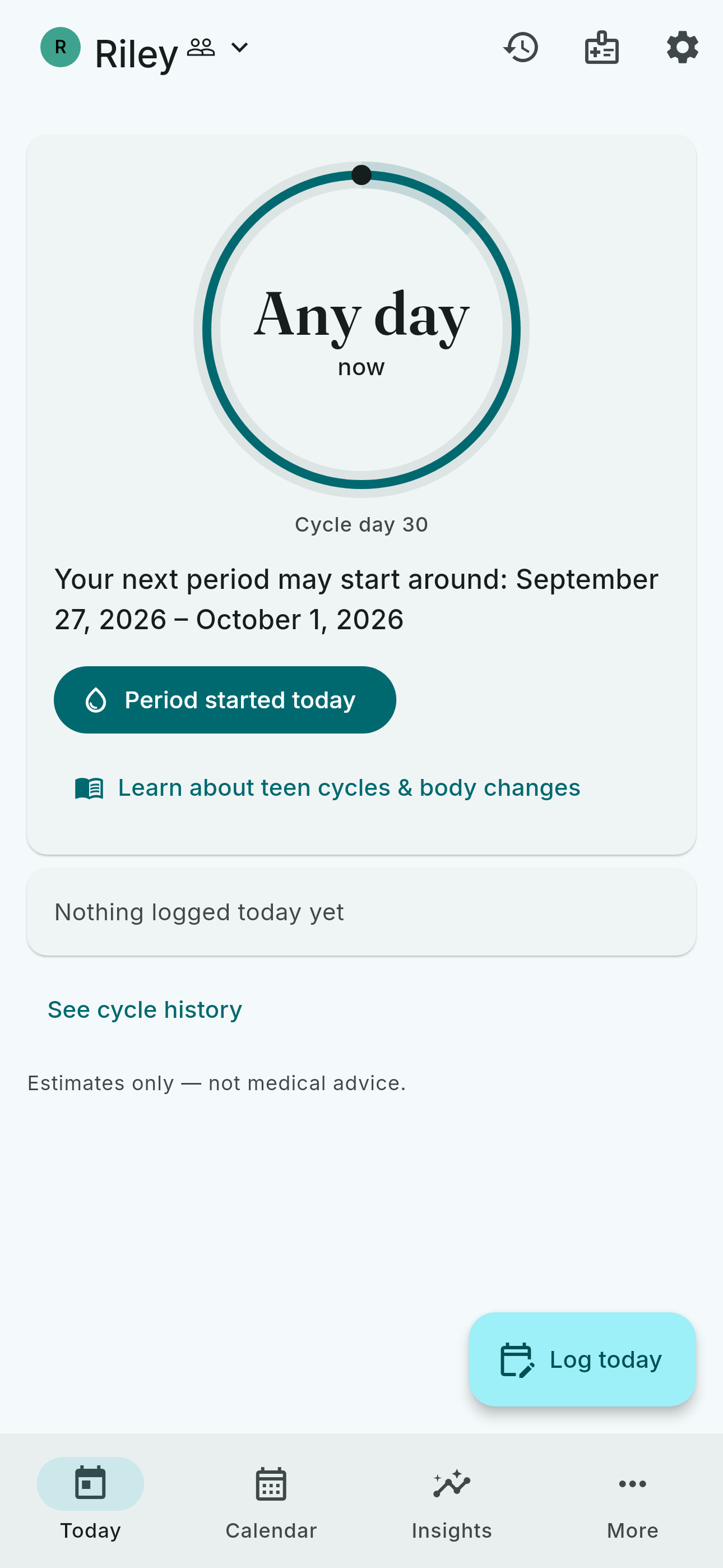
Works offline, edits included
Logging, viewing history, and estimates all run from the copy on your device — nothing you do offline is blocked or degraded. You can edit or delete any entry; deletions remove it here first and are permanently removed from the profile's synced copies.
The private day note
Every accepted guardian on a profile reads what is logged on it — with one deliberate exception. A day note the profile's subject marks private is readable only by them, on their own account, and guardians see a placeholder instead. The choice is made when the note is written; a note already shared cannot be made private afterwards.